
Strategies and Case Studies for Building Ecosystems That Deliver Community Benefits and Build Community Power

From Policy to Possibility

Published September 22, 2026

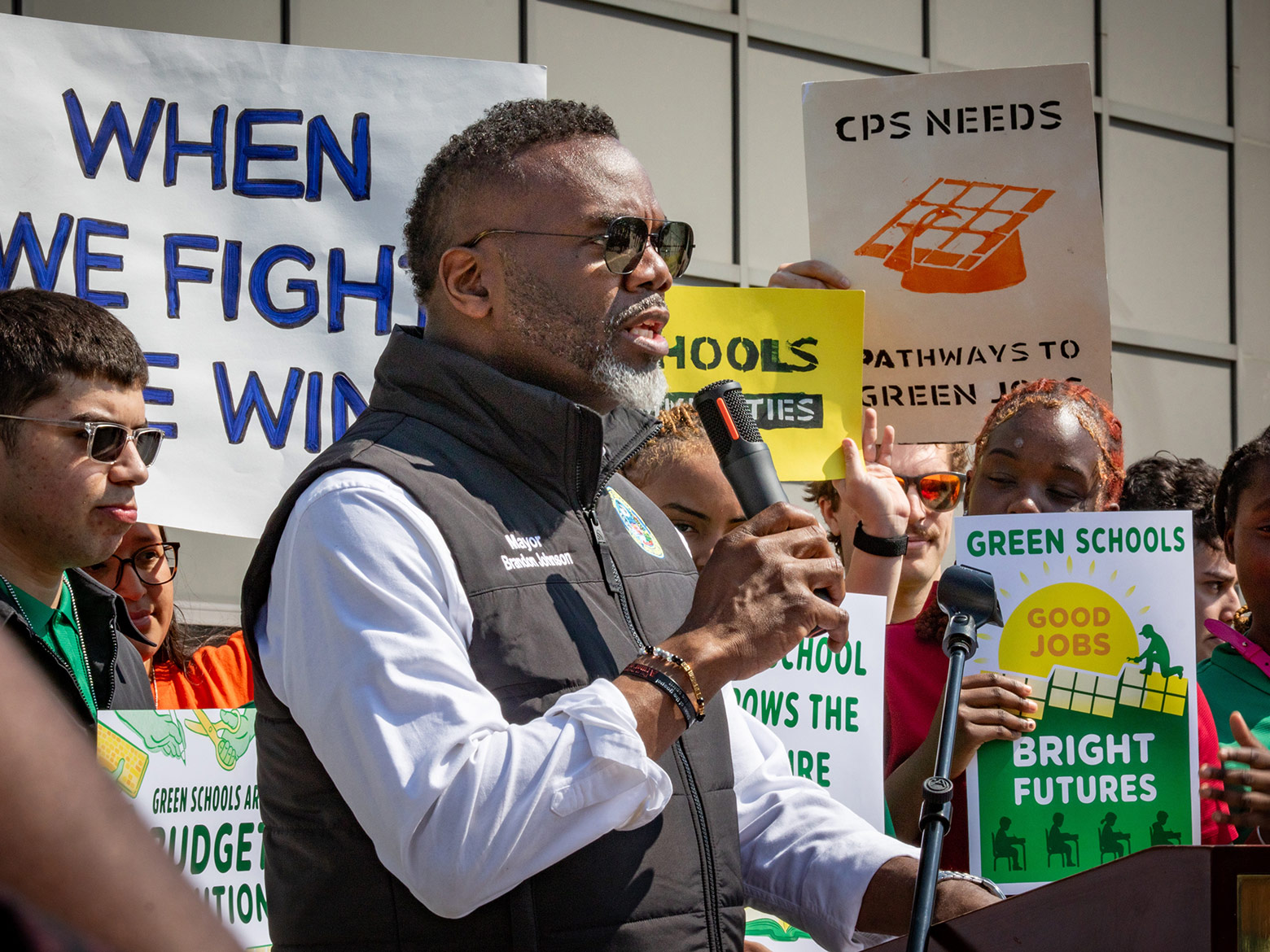
Photo by Matthew Kaplan, courtesy of Chicago Teachers Union

About BuildUS

In 2023, BuildUS was founded as a three-year, $50M fund to support implementation of the Infrastructure Investment and Jobs Act (BIL), the CHIPS and Science Act (CHIPS) and the Inflation Reduction Act (IRA). Together, these laws represented the largest public investments in a generation, unlocking trillions of dollars in investment for infrastructure, domestic manufacturing, and clean energy.

BuildUS brought together clean energy and economic justice funders who saw an opportunity in the laws to strengthen community power and build a fairer and greener economy. These funders recognized that realizing the full transformative potential of these laws depended on whether states, local governments, Tribes, and community organizations had the capacity to translate them into tangible community outcomes.

About This Resource

Through this resource, we seek to answer the question, “What capacities allow communities to convert ambitious public policy into lasting opportunity and systems change?” to help philanthropy, state and local governments, and practitioners better deliver community-driven, community-benefiting projects that also build power.

Report

Each section of this report focuses on a distinct implementation capacity and some of the strategies that make these capacities effective. The downloadable report includes examples that show how these capacities work in practice.

Framework

The downloadable framework provides a way to apply the report’s lessons by identifying existing strengths, missing or underdeveloped capacities, and funding priorities, even in periods without supportive federal policy.

Ecosystem Capacities

Implementation is fundamentally a collaborative, place-based endeavor in which an ecosystem of capacities mutually reinforce one another. We encourage readers who primarily operate in one area of this ecosystem to explore other sections to better understand the connection points that lead to stronger outcomes for working people and communities.

1
2
3
4
5
6
7
8
9

Pillar 1

Organizing Infrastructure

Organizing builds the collective power of residents and workers to act on the issues that matter to them and shape the decisions that affect their communities and workplaces.

It depends on organized constituencies, trusted relationships, local leadership, and coalitions that bring diverse groups together around shared goals. This infrastructure enables workers and communities to exercise greater agency over their economic futures, while engaging new people in civic life and building durable power that can extend beyond any single campaign or project.

BIL, CHIPS, and IRA demonstrated how major public investments can create new opportunities to exercise and expand that power. They included provisions designed to help federal investments translate into good jobs and community benefits, creating new points of leverage that propelled worker organizing already underway and galvanized organizing around new investments. At the same time, implementation created concrete, place-based opportunities to shape projects and public decisions, broaden constituencies, develop new leaders, strengthen coalitions, and secure tangible benefits. Through organizing around implementation, communities have strengthened their power to shape current and future policy and public investment decisions. Where public investments lack similar provisions, organizers have fewer built-in points of leverage for securing worker and community benefits, making sustained organizing infrastructure even more important for continued progress.

Strategies
1 Invest in base-building well before it is needed

Successful organizing infrastructure in communities and in workplaces is built over years of sustained engagement around shared priorities. Organizing brings new people into collective work on these priorities and forms a stronger base. When new programs, investments, and campaigns arise, that base is what allows groups to inform impacted constituents effectively and mobilize them quickly if needed. It is also what puts communities and workers in a position to shape the design of projects, the terms of outside investment, and the quality of the jobs that come with them.

2 Build labor–community partnerships with joint strategy and coordination

Community and labor groups can be mutually beneficial partners to drive better community and worker outcomes, but there is a meaningful difference between these parties engaging as genuine long-term co-developers of strategy and exercising power together, versus one activated primarily when the other needs mobilization support. When these groups are coordinated with shared strategy and mutual accountability, they are more likely to win, especially considering the multi-year, and often non-linear, nature of campaigns. They also expand power over time.

3 Provide dedicated funding for both coalition leadership and participation

Coalitions are often stronger when one organization or staff member is responsible for leading, including holding the campaign manager role, convening partners, and keeping strategy moving. That role can also include building and managing shared infrastructure the coalition runs on, such as digital organizing tools and data systems. Dedicated funding for all coalition members can support more consistent engagement and trust-based relationships that make it easier to establish clear roles, accountability structures, and shared priorities—and ultimately, more resilient coalitions.

4 Support coalitions with the resources needed to win binding commitments

Binding commitments in contracts, collective bargaining agreements, or community benefits agreements help ensure projects and investments result in real gains for communities and workers. Winning them requires deep relationships to accurately represent communities, the organizing strength to mobilize members, and the campaign and legal expertise to know where and how commitments can be made to stick. Intentionally connecting coalitions to national and regional experts can help build that expertise locally.

5 Support diversified, flexible coalition strategies that can be resilient when conditions change

Corporate targets can fold and funding applications can be denied. Coalitions organized around a single project or sector can lose members when that specific opportunity does not materialize, while a broader frame, such as economic development, can keep more partners at the table through changing conditions. This lets a coalition keep building and exercising the campaign muscle to develop successful strategies and engage on new opportunities as they arise.

6 Use implementation as an organizing and leadership development opportunity

Public investment implementation should both deliver projects and expand the number of people who participate in shaping the future of their communities. Outreach, project planning, advisory bodies, public meetings, benefit campaigns, and implementation oversight all provide opportunities to recruit new leaders, deepen community relationships, and build durable organizations that outlast individual investments.

Read the full report for evidence from Alliance of Californians for Community Empowerment, Chicago Teachers Union, Chattanoogans in Action for Love, Equality and Benevolence, Jobs to Move America, and BlueGreen Alliance.

Investing in community organizing is critical. You can't just get funding to get projects done. You have to talk to your electric utility. You have to get your congregation to support it. Widespread adoption of community-controlled clean energy would not have been achieved, especially in communities of color, without the work of community organizers.


Katie Thomas, We Build Progress

Pillar 2

Advocacy

Advocacy helps create and defend the conditions that enable community-serving clean energy and infrastructure projects to move forward through formal approval points and deliver lasting benefits.

In many places, outdated state and local policies, permitting rules, utility regulations, or procurement practices can prevent or discourage projects, while new challenges and project opposition can create additional barriers.

When organized constituencies and non-profit policy advocates combine community power with policy expertise and strategically apply pressure, they can remove barriers, counter new restrictions, secure favorable policies, and turn public will into authority and binding action. This requires permanent staff capacity and policy fluency, capabilities that need sustained support to build momentum and expertise rather than short-term campaign-by-campaign funding. Advocacy can also institutionalize community influence beyond an initial win through governance structures and agreements that give communities an ongoing role in decisions about contracts, regulatory approvals, and budgets.

Strategies
1 Ensure representation at key decisions

Public dollars pass through formal decision points such permit hearings, council votes, and procurement authorizations before they reach the ground. These are often shaped by a handful of decisionmakers responding to whoever is in the room; outcomes in these moments frequently turn on participation rather than on public opinion. Advocacy at this level means knowing when decisions are scheduled and being able to make the case in terms the decisionmakers have authority to act on.

2 Generate decision-ready policy, legal, and technical analysis

Successful implementation advocacy depends on producing the kinds of evidence that decisionmakers can act on—regulatory analysis, legal strategies, cost and economic analysis, implementation guidance, technical testimony, model language, and fiscal analysis. The capacity is not simply conducting research, but translating complex implementation questions into actionable recommendations for agencies, regulators, legislators, and courts.

3 Support enabling policies and remove implementation barriers

Some barriers are not attached to any single project but built into the rules every project navigates: permitting timelines that add cost and drive cancellations, program rules that exclude the households they were designed to serve, or legislation that blocks distributed energy resources. Advocacy that targets these conditions changes the terms for future implementation and does not depend on federal funding to advance.

4 Defend implementation against legal, regulatory and political threats

Organizations without the capacity to respond to threats of frozen funds and program terminations can lose gains that had been secured. Defense depends on relationships and material assembled before they are needed, and on the flexibility to change venue, theory, or target while holding the goal. It also requires funders willing to sustain organizations through losses and rebuilding years.

5 Embed commitments in the rules that govern implementation

Advocacy can convert intentions into formal commitments that bind how programs and projects are implemented, from labor and community benefits attached to public contracts to seats on the bodies that oversee programs, ensuring community decisionmaking power.

Read the full report for evidence from Alaska Public Interest Research Group, Alaska Center Education Fund, Power Up Harris County, Power Up Bern Co., and NC Sustainable Energy Association.

When a policy mandate exists before a project starts, it gets pitched and built in a way that actually benefits the community through union jobs, local investment, and a say in how community funds get used… Funding the capacity and ecosystem behind it gets you permanent policy and a coalition that can do this again, get bigger and get smarter.

Neidi Dominguez Zamorano, Organized Power in Numbers

Pillar 3

Communications

Within every piece of policy is a story about a problem facing hard-working Americans, why government is a part of the solution, and how communities will be equipped with tools and opportunities through a policy’s successful implementation.

This narrative framework is deeply important, not just for building public understanding of legislation, but for aligning implementation actors around shared goals, ensuring communities are aware and can access resources, and for telling stories and documenting positive results as they emerge. Narrative and communications strategies ensure that investments in working people are accessible, meaningful, and durable. As a result, communications should be treated as a critical part of the machinery that makes policy implementation possible. We should prioritize communication and storytelling as soon as policy wins happen or even before they pass.

Strategies
1 Integrate communications into implementation planning

Building communications capacities early ensures partners have time to align on a policy narrative, identify trusted storytellers, and anticipate media incentives, benefit timing gaps, and political calendar constraints. Without early narrative leadership, communicating about successful implementation happens in a vacuum, and may face headwinds from misinformation.

2 Support state and local communications capacity

State and local communications ecosystems, which can include non-profits, media organizations, and other communicators, need investment in their capacity to produce the stories and content that make a shared policy narrative come to life. National organizations can develop message research, narrative frameworks, and communications guidance, but state and local organizations need to be able to adapt these resources to local conditions, and connect policy to tangible community impacts. Investing in permanent state and local communications capacity and coordination across issue silos strengthens the entire implementation ecosystem by creating a two-way exchange: national strategies inform local communications, while local experience and learning continually sharpen the broader narrative.

3 Frame public investments around tangible economic benefits

Connecting tangible economic outcomes, and proximate community benefits to public investment makes implementation far more meaningful than leading with legislative names or program mechanics. Communications should lead with the concrete benefits people and communities experience, such as lower household costs, a small business saving money through a rooftop solar installation, better jobs, and stronger infrastructure.

4 Support robust storytelling networks and trusted messengers

Implementation is most credible when working people see how public investment affects the lives of people in their communities who they trust. This is why it’s important to invest in systems that empower community members to tell their own stories. Story banks, storyteller training, and editorial support are essential shared communications infrastructure at the state level. Dissemination is equally important. Ensuring coordination with local media, owned media, andor organizations that specialize in digital organizing strategy can ensure implementation stories reach audiences where they are.

5 Coordinate partners around a shared narrative

Shared narrative frameworks give organizations across issues, geographies, and institutional roles a common foundation for explaining the purpose and value of public investment that, when repeated, can build narrative power. Consistent narrative discipline creates the highest chance of stories of implementation success gaining traction with the public. Sustaining this alignment as implementation evolves requires ongoing investment in research, coaching, training, peer learning, and national, state, and local feedback loops.

Read the full report for evidence from Progress North Carolina, WorkMoney, Resource Rural, and Winning Jobs Narrative Education.

Narrative capacity building…means coming to partners with an open hand, and asking, how can we help? It's not enough for us to go to a group and say, here's a messaging framework, implement it. We first have to build enough trust… We have to respect…that communities have meaningful choices that they want to make about the stories that they're trying to tell.

Madeline McGill, Resource Rural

Pillar 4

Technical Assistance

Effective technical assistance strengthens both communities and state and local governments by complementing community knowledge and decision-making with specialized expertise.

Communities possess deep knowledge of local conditions, trusted relationships, lived experience, and a clear understanding of community priorities. Yet turning public investments into meaningful outcomes often requires additional capacities—including project development, financing, regulatory navigation, consumer navigation, and implementation expertise. Technical assistance is most effective when it builds on local knowledge and leadership, and helps communities navigate complex opportunities, while enabling public agencies to manage increasingly interconnected financing, regulatory, market, and delivery systems.

The scale, complexity, and pace of opportunities created by BIL, CHIPS, and IRA made the importance of these complementary capacities especially clear, as communities and public agencies worked to design viable projects, navigate new financing and regulatory pathways, and move investments from opportunity to implementation. These capacities are especially important for historically disinvested communities, where longstanding underinvestment has limited opportunities to build them. Without targeted support, the gap between these communities and those that are well-resourced and already have strong technical capabilities will continue to widen.

Strategies
1 Fund the full project lifecycle

Provide technical support across the full project lifecycle—from opportunity identification and project development through financing, implementation, compliance, and long-term stewardship—so communities have the right expertise at the right time and projects can adapt as implementation conditions change.

2 Combine specialized and place-based expertise and capacity

Support technical assistance models that combine specialized expertise with place-based knowledge, relationships, and capacity when these are important to effective implementation. Some specialized capacities, such as legal, regulatory, or financial expertise, may be delivered more efficiently by national or regional providers, while place-based partners help tailor that expertise to local priorities and conditions, reach historically disinvested communities, and strengthen project outcomes.

3 Strengthen long-term readiness

Help organizations and leaders build the confidence, relationships, institutional knowledge, and implementation capacity needed to lead increasingly complex projects over time.

4 Provide legal navigation and de-risking infrastructure

Help communities protect awards and adapt to changing conditions during periods of political and administrative uncertainty by supporting legal, regulatory, communications, and compliance capacity.

5 Support consumer navigators and feedback loops

Household- and consumer-facing programs are effective when they combine user-friendly digital tools with trusted community navigators who help residents access benefits, overcome barriers, and create feedback loops that continuously improve program design and delivery.

6 Include peer learning and connection

Provide opportunities for grantees to gather, identify best practices, and share and compare their experiences. Grantees value having space and time to learn from others in both similar and different contexts, to understand how federal agencies in different regions are approaching national requirements, and during challenging times, to keep their spirits up and encourage each other.

Read the full report for evidence from Elevate Energy, Slipstream, Environmental Protection Network, Lawyers for Good Government, State Support Center, Energy Funds for All, and Rewiring America.

Meeting vulnerable residents where they are with resources they need is more important than ever. We can't protect our communities from the impacts of climate change without funding projects that make solutions accessible, affordable, and achievable.

Michelle (Meech) Carter, North Carolina League of Conservation Voters Foundation

Pillar 5

Government-Community Partnerships

Publicly funded clean energy and infrastructure projects advance through formal government decisions, but their success often depends on organizations outside government that offer complementary capacities.

Government agencies provide fiscal authority, administrative expertise, and institutional leverage, while community-based and non-profit organizations contribute organized constituencies, public legitimacy, real-time community knowledge, and specialized expertise. Implementation demonstrated the importance of bringing these capacities together, as state and local governments worked to translate unprecedented federal investment into projects responsive to local conditions and priorities.

Structured partnerships bring these strengths together while preserving distinct roles. With clear working agreements, regular coordination, and mutual accountability, the relationship itself becomes an implementation infrastructure that enables partners to navigate administrative complexity, identify opportunities, adapt to changing conditions, and solve problems to keep work moving forward.

Strategies
1 Build government-community relationships before projects begin

Implementation is more successful when government agencies and community organizations have established working relationships before funding becomes available. These relationships are often built through sustained collaboration across multiple projects and funding cycles, long-term planning initiatives, advisory committees, or problem-solving around local challenges. By developing trust, shared expectations, and experience working together before a specific funding opportunity arises, partners are better positioned to move quickly and adapt as implementation becomes more complex than planned.

2 Combine complementary roles for government and community

Government entities and regional intermediaries typically bring administrative capacity, including grant management, contractor coordination, compliance oversight, while community organizations contribute trusted relationships, local knowledge, and the ability to sustain engagement with residents. Clearly defining how each partner contributes these complementary strengths makes implementation more coordinated, effective, and durable.

3 Establish structured coordination and shared accountability

When implementing specific projects or programs, recurring check-ins, shared tracking, and clear accountability practices enable community and government partners to identify challenges early, make decisions jointly, and maintain momentum. These structures help partnerships respond consistently as projects evolve rather than relying on ad hoc communication.

4 Support government leaders who can drive community partnership

Effective government-community collaboration depends on government leaders with the credibility to influence internal decisions, the commitment to partner with community organizations, and the authority and capacity to pursue new ways of working. These leaders are most effective when they have clear responsibility, dedicated time and authority to advance partnership commitments, and institutional support that ensures continuity beyond any one individual. Equipped to navigate government processes and advance collaborative solutions, they become trusted counterparts for community partners.

5 Build administrative flexibility into program design

Implementation rarely goes according to plan. Government agencies can improve implementation by identifying in advance where timelines, budgets, procurement, reporting requirements, and regulatory processes can be adjusted without undermining accountability. Building this flexibility into program design allows partners to respond to changing conditions without negotiating exceptions under pressure.

6 Create cross-agency coordination capacity

Many implementation projects require coordination across multiple agencies, making explicit cross-agency mechanisms essential for aligning timelines, funding, and regulatory processes. Coordination should also make government easier for communities to navigate by connecting related programs and enabling staff to help stakeholders reach the right agency or program rather than requiring them to navigate government structures themselves. This allows implementation partners to engage government as a coordinated system rather than a collection of separate agencies.

Read the full report for evidence from Pennsylvania United, Convivencia Hispana, Region Nine Development Commission, Invest Appalachia, and Enfield Energy Futures.

In communities like Enfield, the vision and determination are already here. Philanthropy can help by funding the people, planning, and patient relationship-building that turn that vision into projects. Local government brings public authority and infrastructure; community partners bring trusted relationships, expertise, and accountability to residents.

William Munn, Enfield Energy Futures

Pillar 6

Workforce Development

Successful workforce development takes more than building additional training programs.

The scale of clean energy, infrastructure, and manufacturing projects catalyzed by BIL, CHIPS, and IRA created a significant need to expand apprenticeship and pre-apprenticeship programs to meet this increased demand for skilled workers. However, these programs alone cannot ensure that workers complete multi-year training pathways, connect to high-quality jobs, or that employers have access to the skilled workforce they need. Effective workforce development depends on an interconnected ecosystem that aligns employers, government, training providers, labor organizations, community partners, and supportive services to recruit workers, sustain their participation, and connect them to quality jobs. Without these complementary capacities, workforce investments can struggle to translate into lasting employment opportunities and an equitable, skilled workforce.

Strategies
1 Create demand for quality jobs through labor agreements and hiring commitments

Project labor agreements, local-hire rules, and other commitments attached to public and private investments establish job quality standards and create demand for family-sustaining jobs ready for trainees when they complete their programs.

2 Build a workforce that includes historically disinvested communities

A workforce that reflects the communities where projects are built is not an automatic outcome of public investment, as the trades can reproduce existing patterns of who enters them. Deliberate outreach through community-based organizations and training providers can open these careers to workers who have been historically excluded from them.

3 Fund the coordination that connects job-seekers, training, employers, and labor

The workforce ecosystem is fragmented across programs, employers, unions, and community organizations that might not communicate data and timelines to one another. Intermediaries that coordinate across them can match training capacity to actual hiring demand.

4 Pair training with the wraparound services workers need to finish

Apprenticeships can run several years, and barriers that lead people to leave careers—lack of childcare and transportation, equipment costs, income gaps—can emerge well into a program or even after they’ve graduationed. Dedicated case management that follows workers over time, paired with referral partnerships for supportive services, can help retain a larger skilled workforce.

Read the full report for evidence from Climate Jobs National Resource Center, Wisconsin Regional Training Partnership | Building Industry Group Skilled Trades Employment Program, Partner4Work, and Music City Construction Careers.

Workforce development isn’t just about training people for jobs. Done well, it connects workers to quality jobs while building the relationships, skills, and agency that allow them to participate in, and strengthen, the economic ecosystems taking shape in their communities.

Molly Hempstreet, The Industrial Commons

Pillar 7

Capital & Financing

New tax credits, grants, and loan programs within BIL and IRA changed the math for community-scale and residential clean energy and infrastructure projects in places that had rarely seen this kind of investment.

For the first time, schools, houses of worship, nonprofit food banks, and small municipalities had an easier path to own these projects and keep the revenue they generated, because new provisions like direct pay meant tax-exempt entities could finally capture the full value of the credits.

However, using these new provisions and programs took education, legal help, deal structuring, organizational capacity, and upfront capital that most community groups and households didn't have. To solve these issues, a network of investors, developers, community organizations, technical assistance providers, and legal partners has come together over the last few years to help communities and households actually use these programs and to build a market for community-driven projects at scale. These types of projects are routinely dismissed by conventional lenders given their size or perceived risk, and the capital that does reach them is often priced or structured in ways that make it hard to deploy. When financing models are designed for projects at this scale and the intermediaries that help these projects come together are resourced, more communities and households can own and benefit from clean energy and infrastructure deployment.

Strategies
1 Provide projects and financial intermediaries with capital

Direct grants, guarantees, loan loss reserves, and working capital loans can help move projects from initial design to construction. Completed projects generate revenue that can seed the next one and build the track record that makes future deals easier to finance.

2 Build the infrastructure needed to use new financing tools and funding programs

New financing mechanisms and new government funding programs require organizations to understand new rules, structure projects appropriately, assemble financing, comply with legal requirements, and navigate new administrative processes—which can take a constellation of partners as organizations move through the stages. Legal partners also shape the conditions projects operate in, supporting how public programs get designed and intervening in the regulatory proceedings that determine what is possible in a given market.

3 Support work that unlocks state and local public financing tools

Municipal bonds and state revolving funds are examples of other public financing tools that communities can use, but they require coalitions to demand them, officials who understand the options, and technical help to structure them. They are also a place where communities can specify terms that matter—labor standards, community benefits, and who ultimately owns and governs what gets built. Funding that groundwork lets communities keep moving projects regardless of changes at the federal level.

4 Design ownership structures intentionally from the start

Public investment can shift economic power when communities don't just receive economic activity but shape ownership structures, retain long-term value, and build institutions that govern how benefits are distributed.

5 Reduce project transaction costs through coordination, bundling, and standardization

Aggregating projects, standardizing financial models and documentation, and creating shared systems can lower costs and strengthen negotiating power, which is especially critical for historically disinvested and underinvested communities, whose projects have too often been deemed too risky, too small, or too complex to finance.

6 Invest in digital platforms and tools

Platforms can help move capital more efficiently by matching projects to different funding sources and resources. Well-designed tools make programs usable for the households and small contractors they are meant to serve, and reduce friction in managing distributed assets and reporting for government compliance.

Read the full report for evidence from EnerWealth Solutions, West Central Initiative, Milken Institute's Community Infrastructure Center, and Capital Good Fund.

The path to replicability starts with building the first model and its capital stack. That takes upfront investment and often a small amount of flexible capital, whether equity, a guarantee, or a low-cost loan, to fill the gap that unlocks other financing. That’s where philanthropy can have enormous leverage: understanding what capital is missing and providing the piece the market won’t, at least not at first.

Ajulo Othow, EnerWealth Solutions

Pillar 8

Research & Data Tracking

Research and data systems are critical implementation infrastructure because they enable continuous learning throughout the implementation process.

By tracking investments, preserving institutional knowledge, and generating evidence, they help policymakers, practitioners, and the public understand what funding is available, what has been distributed, and whether investments are reaching intended beneficiaries. The breadth and scale of investments made through BIL, CHIPS, and IRA underscored the importance of this infrastructure, as funding flowed through multiple programs, agencies, and levels of government and implementation unfolded differently across places. This information can also help identify barriers to accessing resources, improve programs over time, and inform future policy decisions. Because BuildUS's investments in this capacity were relatively limited compared to other ecosystem capacities, the strategies elevated represent only a portion of the broader research and learning ecosystem needed to support implementation at scale.

Strategies
1 Support publicly accessible, independent investment, award, and project tracking

Implementation benefits from trusted, publicly accessible tracking systems that document where investments are flowing, how projects are progressing, and which communities are benefiting. Effective systems integrate multiple data sources into accessible dashboards that support policymakers, journalists, researchers, practitioners, and local leaders while increasing transparency, enabling better decision-making, and strengthening public accountability.

2 Preserve public data and institutional knowledge through political transitions

Implementation knowledge is vulnerable to political transitions, staff turnover, and changing agency priorities. Preserving datasets, guidance, case studies, templates, and implementation resources helps ensure that practitioners and researchers can continue to track funding flows, use valuable resources and tools developed by public agencies, and learn about investments and the ongoing work related to these investments, even when government systems change.

3 Use research and analysis to improve continuing implementation and future policy

Research and analysis strengthen implementation by helping policymakers and practitioners make better decisions before, during, and after implementation. Evidence can identify emerging opportunities, inform state and local policy development, evaluate the impacts of public investments, and generate insights that improve future policy design. Strong research systems connect scholars, practitioners, public agencies, communities, and other constituencies to translate complex analysis into practical guidance that supports decision-making throughout implementation rather than only assessing outcomes after programs conclude.

Read the full report for evidence from Atlas Public Policy, MIT's Center for Energy and Environmental Policy Research, Data for Progress, RMI, EconClimate Lab, and the Washington Center for Equitable Growth.

Data is a tool, best used as a starting point and leverage for organizing conversations and on-the-ground engagement. Preserving public data is only the first step. Communities need support to find it, understand it, and put it to work. Funders need to invest not just in collecting data, but in getting it into the hands of those who can actually use it to shape projects and decisions.

Catherine Fraser, Data for Progress

Pillar 9

Ecosystem Builders

Ecosystem builders are organizations that connect, coordinate, and strengthen the capabilities needed for successful implementation.

They create effective implementation networks in places that enable communities to access the right support at the right time, while building long-term local leadership and institutional capacity. The scale and complexity of implementation under BIL, CHIPS, and IRA made the importance of this role especially clear. Communities often had trusted local leadership and strong place-based institutions, but lacked some of the specialized expertise, resources, and information needed to navigate complex projects and new funding opportunities.

Ecosystem builders help fill these gaps by identifying implementation needs and opportunities; connecting communities with trusted technical assistance providers, funders, financing partners, and other specialists; and recruiting or developing new partners where critical capabilities are missing. They also facilitate peer learning and help replicate successful models across communities. By reducing the costs of assembling the implementation capacities communities need, ecosystem builders can accelerate projects while strengthening community power and collective ownership, resulting in communities that are better equipped to pursue future opportunities.

Read the full report for evidence from Building Power Resource Center, Resource Rural, and The Industrial Commons.

Community-labor coalitions and local leaders are proving clean energy can lower costs and create good jobs now. Strong organizing keeps projects moving through national political change while each successful project builds demand for the next as well as the capacity to go bigger when new policy opportunities emerge.

Yong Jung Cho, Building Power Resource Center
download icon

Resources

We have created two downloadable resources, a report with examples from BuildUS partners and a framework we hope you can use to apply these findings to your work.

Full Report PDF

46 pp, 1.94 MB

From Policy to Possibility: Strategies and Case Studies for Building Ecosystems That Deliver Community Benefits and Build Community Power

Full report with capacities, strategies, and case studies

Download Report

Framework PDF

5 pp, 0.44 MB

From Policy to Possibility: A Framework for Strengthening Ecosystems to Deliver Community Benefits and Build Community Power

Actionable framework to apply key lessons from report

Download Framework